
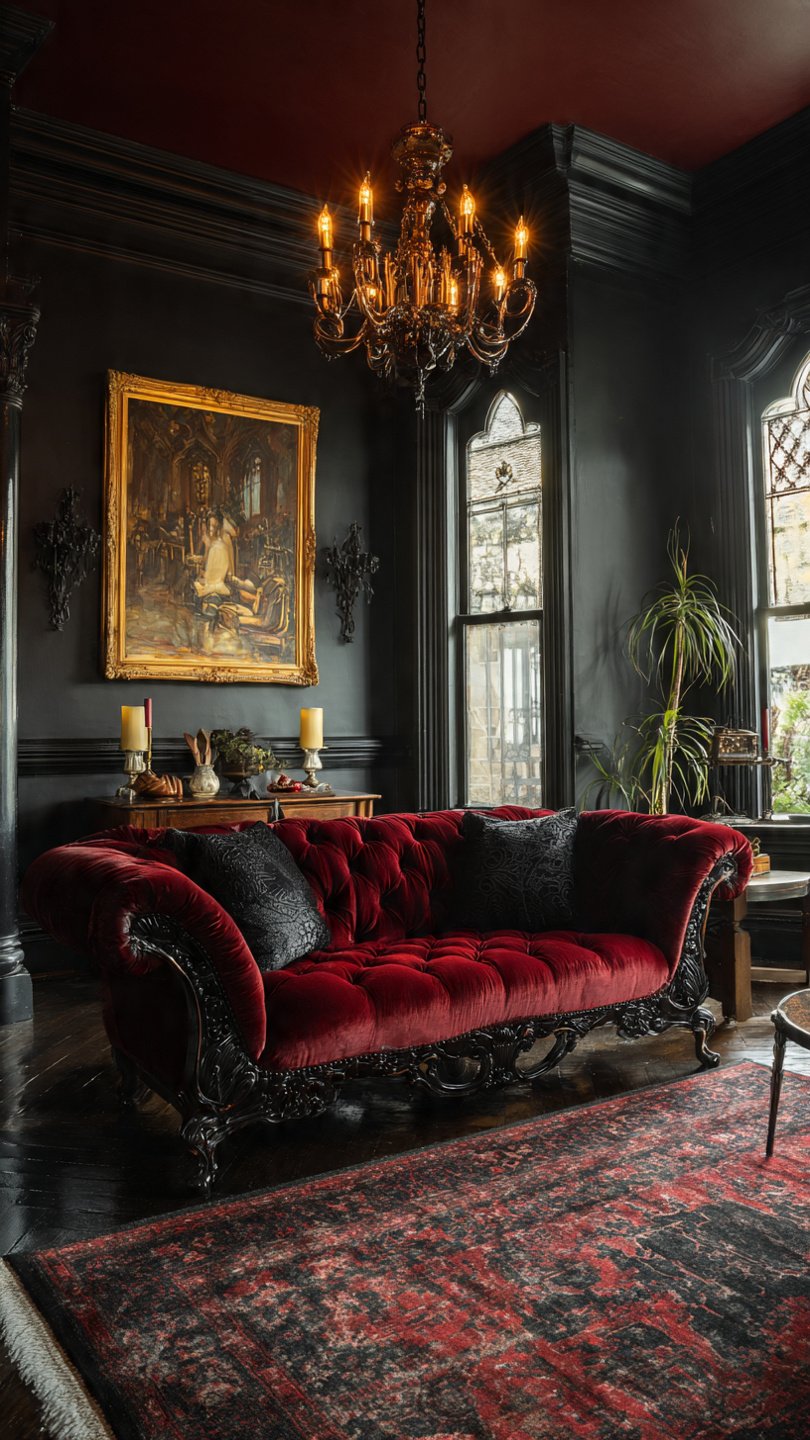
Black walls. Velvet sofas. Candlelight glowing against antique gold frames.
A Gothic living room doesn’t whisper.
It makes a statement.
While most homes follow light and minimal trends, gothic interiors go the opposite way. They are bold. Moody. Dramatic. And surprisingly… cozy.
That’s why Gothic living rooms are trending on Pinterest, Instagram, and modern home design blogs. People want spaces with personality — not plain white rooms that all look the same.
The good news?
You don’t need a castle or a huge budget to create this look.
With the right colors, textures, and decor, you can turn any space into a stylish gothic retreat.
In this guide, you’ll learn simple, beginner-friendly Gothic living room ideas using easy steps and smart design tips.
Let’s dive in.
What Is a Gothic Living Room Style (And Why It’s So Popular)
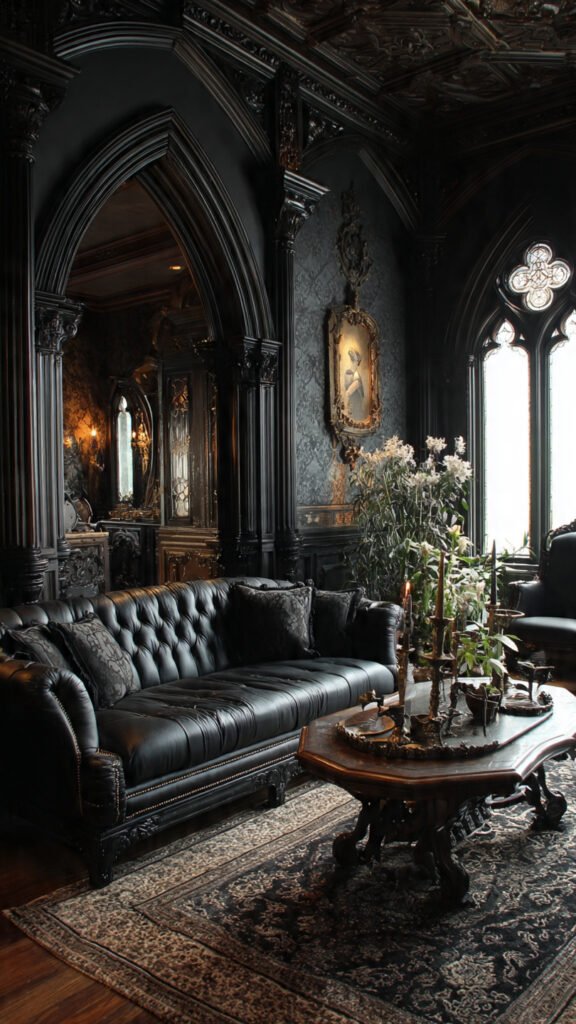
Gothic design comes from old European architecture and vintage interiors. Think historic mansions, dramatic lighting, and rich materials.
But modern gothic style isn’t scary or outdated.
It’s elegant and luxurious.
It mixes:
- Dark colors
- Vintage furniture
- Heavy textures
- Moody lighting
- Antique decor
The result feels warm, mysterious, and relaxing.
People love it because it’s different. While everyone else chooses beige and white, gothic rooms feel unique and personal.
Plus, darker spaces often feel cozier at night. Perfect for movies, reading, or relaxing after work.
If you like bold design and a touch of drama, this style is perfect for you.
Choose Deep, Moody Colors for Instant Drama
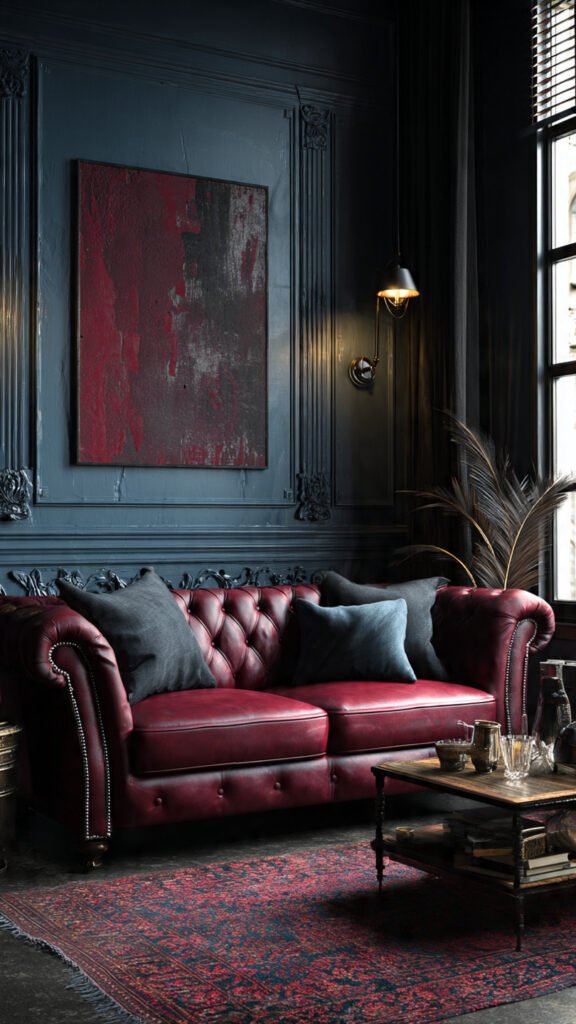
Color is the heart of every Gothic living room.
Light colors won’t give you the gothic mood. You need deep, rich tones.
Here are the best paint colors:
- Matte black
- Charcoal gray
- Deep burgundy
- Dark plum
- Forest green
- Navy blue
- Chocolate brown
These shades create depth and make the room feel luxurious.
But here’s an important tip:
Don’t paint everything one flat color.
Mix shades.
For example:
Black walls + burgundy sofa + gold accents.
This layering makes the room feel designed, not heavy.
Also choose matte or satin finishes. Glossy paint reflects too much light and ruins the dark effect.
Pick Statement Furniture with Vintage Character
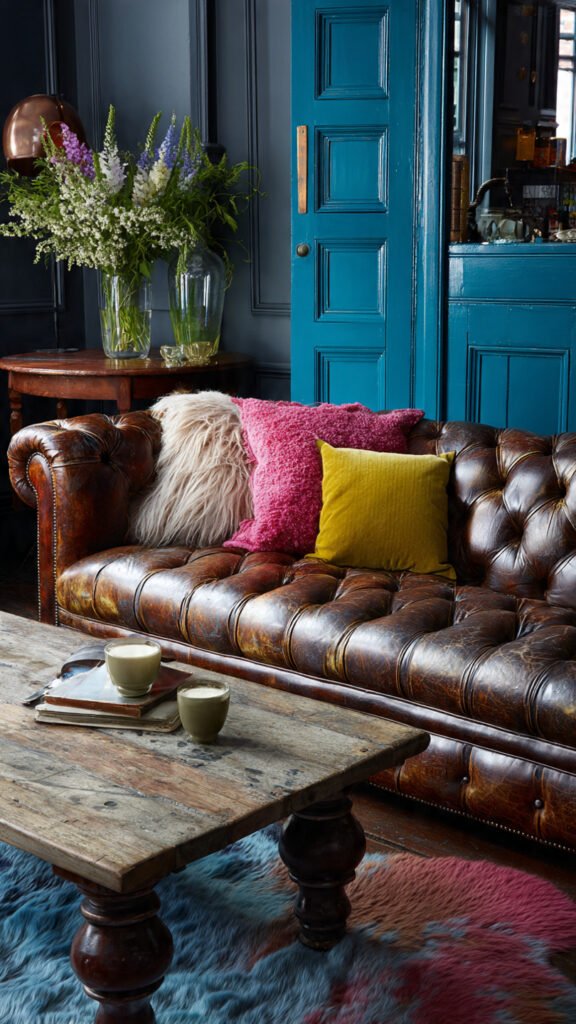
Furniture in a gothic living room should feel strong and classic.
Avoid modern plastic or minimal pieces.
Instead, choose furniture with personality.
Look for:
- Tufted velvet sofas
- Leather armchairs
- Carved wooden tables
- Antique cabinets
- High-back chairs
- Dark wood finishes
Curves, details, and texture are important.
For example, a velvet Chesterfield sofa instantly gives gothic luxury. A plain modern couch won’t.
If you’re on a budget, check thrift stores or vintage markets. Older furniture often fits this style perfectly.
Remember: bold and timeless beats trendy and simple.
Layer Rich Textures to Create Warmth and Depth
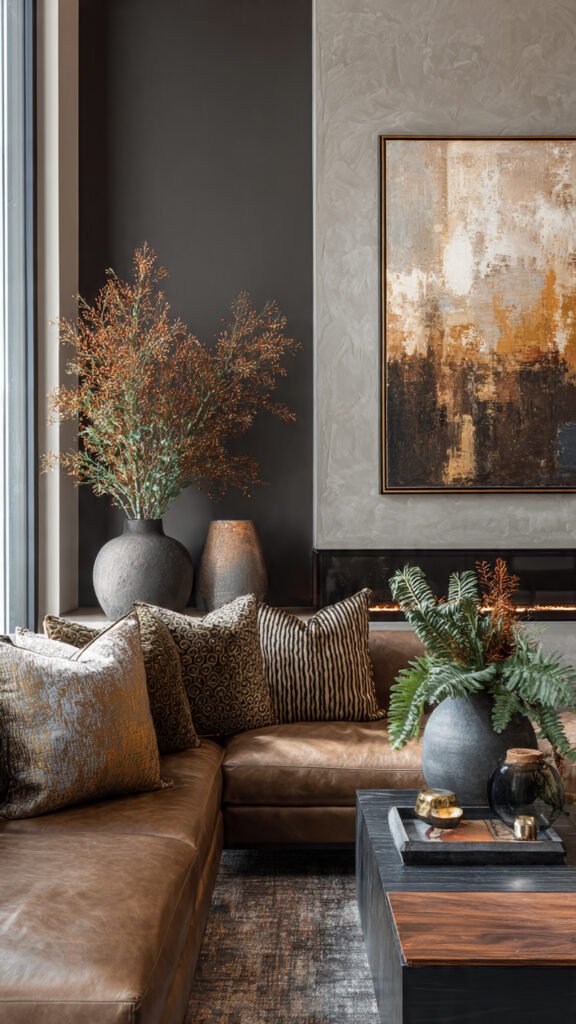
Dark rooms can feel flat without texture.
That’s why layering materials is very important.
Textures add warmth and make the space feel cozy instead of cold.
Mix these elements:
- Velvet cushions
- Thick curtains
- Faux fur throws
- Leather seating
- Heavy rugs
- Wood furniture
- Metal accents (gold, brass, iron)
Each texture reflects light differently. This creates depth and keeps the room interesting.
For example:
A velvet sofa + leather chair + soft rug + wooden table = perfect balance.
Without texture, dark walls feel empty. With texture, they feel rich and luxurious.
Use Moody Lighting for a Cozy, Dramatic Glow
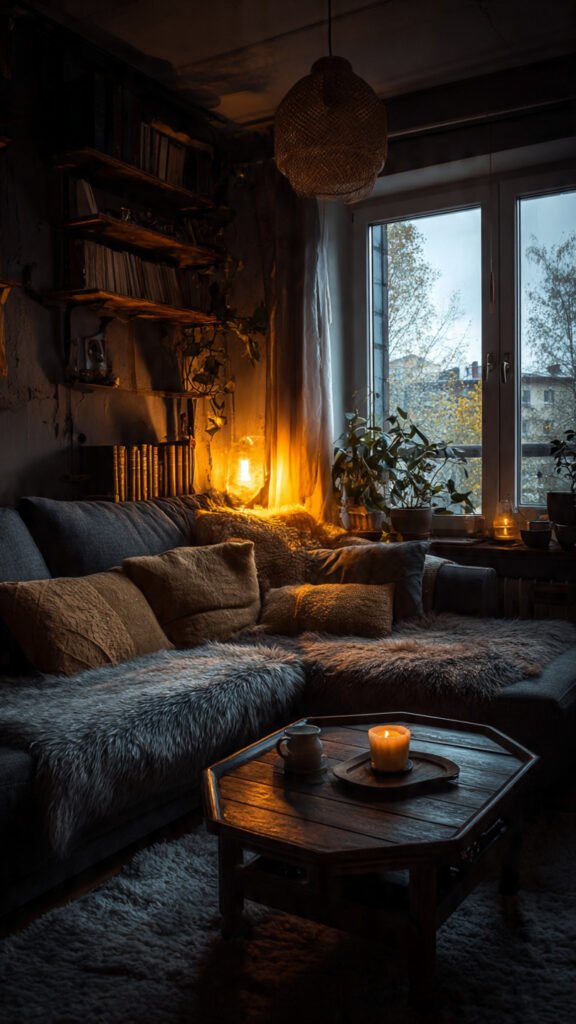
Lighting can make or break a Gothic living room.
Bright white lights destroy the mood.
Soft, warm lighting creates magic.
Instead of one ceiling light, use multiple light sources.
Try:
- Table lamps
- Floor lamps
- Wall sconces
- Candles
- Lantern-style lights
- Chandeliers
Warm bulbs (2700K) work best. They give a golden glow that feels cozy and vintage.
Candles are especially perfect. They add flickering shadows that match gothic vibes beautifully.
Layered lighting makes the space feel mysterious and relaxing — never harsh or clinical.
Think “castle glow,” not “office brightness.”
Decor Ideas That Complete the Gothic Look
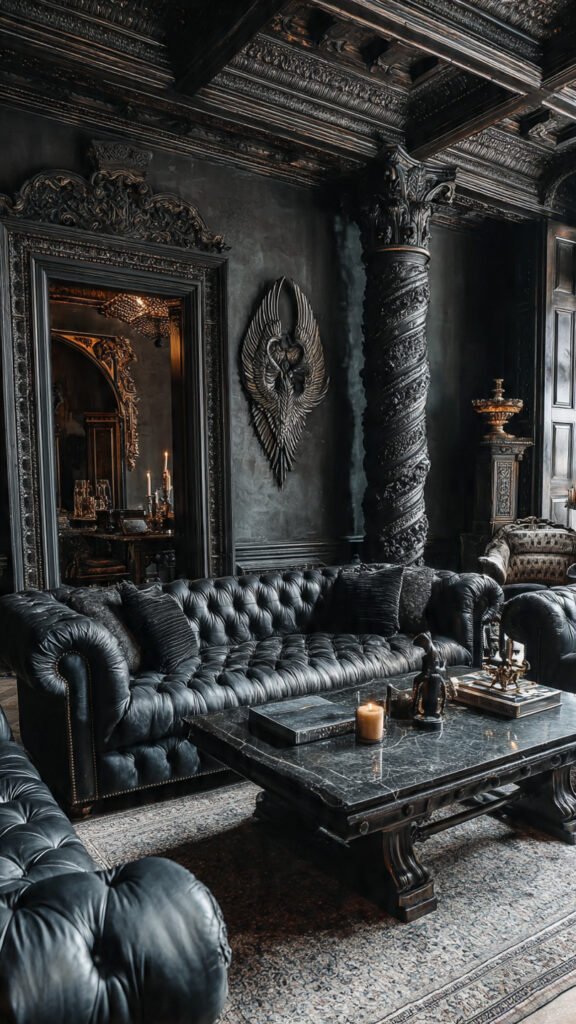
Decor is where your personality shines.
But gothic decor isn’t cluttered.
It’s bold and intentional.
Choose statement pieces instead of many small items.
Great gothic decor ideas:
- Antique mirrors
- Gold or black frames
- Large dark artwork
- Vintage clocks
- Bookshelves
- Candlesticks
- Dark floral arrangements
- Gothic-style sculptures
- Heavy drapes
Plants with deep green leaves also look amazing against dark walls.
Avoid bright neon colors or modern plastic decor. They break the theme.
Every item should feel classic, dramatic, or slightly vintage.
If it looks like it belongs in an old mansion, it’s perfect.
How to Design a Small Gothic Living Room Without Feeling Cramped
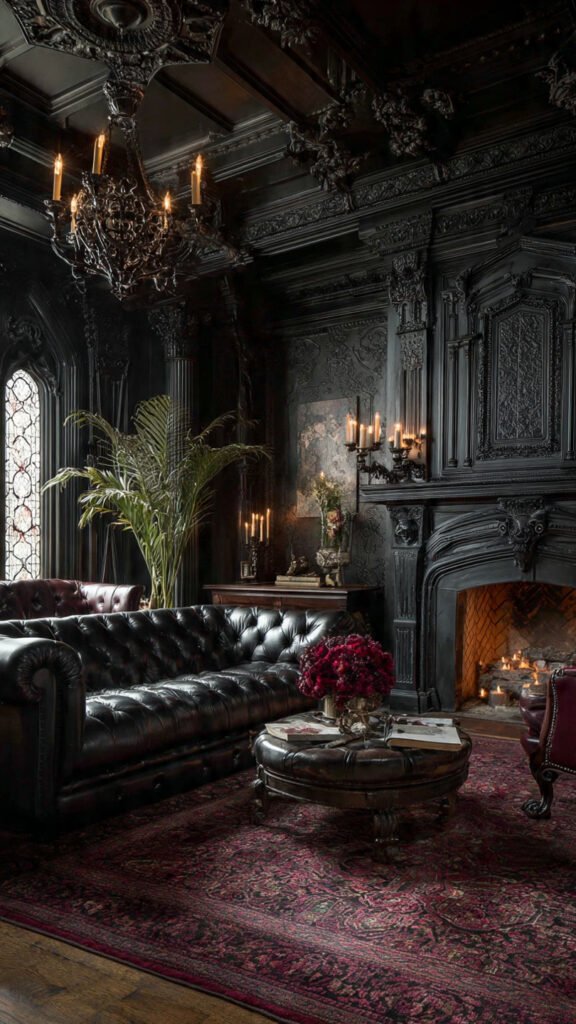
Many people worry that dark colors make small rooms look tiny.
But with the right tricks, small gothic rooms look cozy and stylish.
Here’s how:
- Use mirrors to reflect light
- Add layered lighting
- Keep furniture minimal but bold
- Choose one main color theme
- Use tall curtains to add height
- Keep floors clean and uncluttered
Dark walls can actually blur edges, making the space feel deeper.
The key is balance.
Don’t overcrowd the room. Let statement pieces breathe.
Even a small apartment can feel like a luxury gothic lounge with smart styling.
Conclusion
Most living rooms look safe.
White walls. Basic sofa. Nothing special.
But a Gothic living room?
It tells a story.
It feels bold, cozy, and unforgettable.
With deep colors, vintage furniture, rich textures, and warm lighting, you can create a space that feels luxurious and personal.
You don’t need to copy trends.
You create your own.
Start small. Paint one wall. Add velvet cushions. Try candle lighting.
Once you see the transformation, you’ll never go back to plain decor again.
Dark isn’t depressing.
When done right, it’s dramatic, elegant, and incredibly beautiful.
FAQs About Gothic Living Rooms
1. What is a Gothic living room style?
It’s a dark, dramatic interior style using rich colors, vintage furniture, and moody lighting.
2. Are dark walls a bad idea for small rooms?
No. With good lighting and mirrors, dark walls can feel cozy and deep.
3. What colors work best for gothic interiors?
Black, burgundy, deep green, navy, plum, and charcoal gray.
4. What furniture suits this style?
Velvet sofas, leather chairs, carved wood tables, and antique pieces.
5. How do I keep a gothic room from looking gloomy?
Use warm lighting, textures, and metallic accents for balance.
6. Can I mix modern and gothic decor?
Yes, but keep modern items minimal and neutral to maintain the mood.
7. Are candles necessary?
Not required, but they add perfect gothic ambiance and warmth.
8. What type of curtains look best?
Heavy fabrics like velvet or thick linen in dark shades.
9. Is gothic design expensive?
Not always. Thrift stores and vintage pieces can be affordable.
10. Is this style just a trend?
No. Gothic design is timeless because it’s based on classic, historic elegance.