
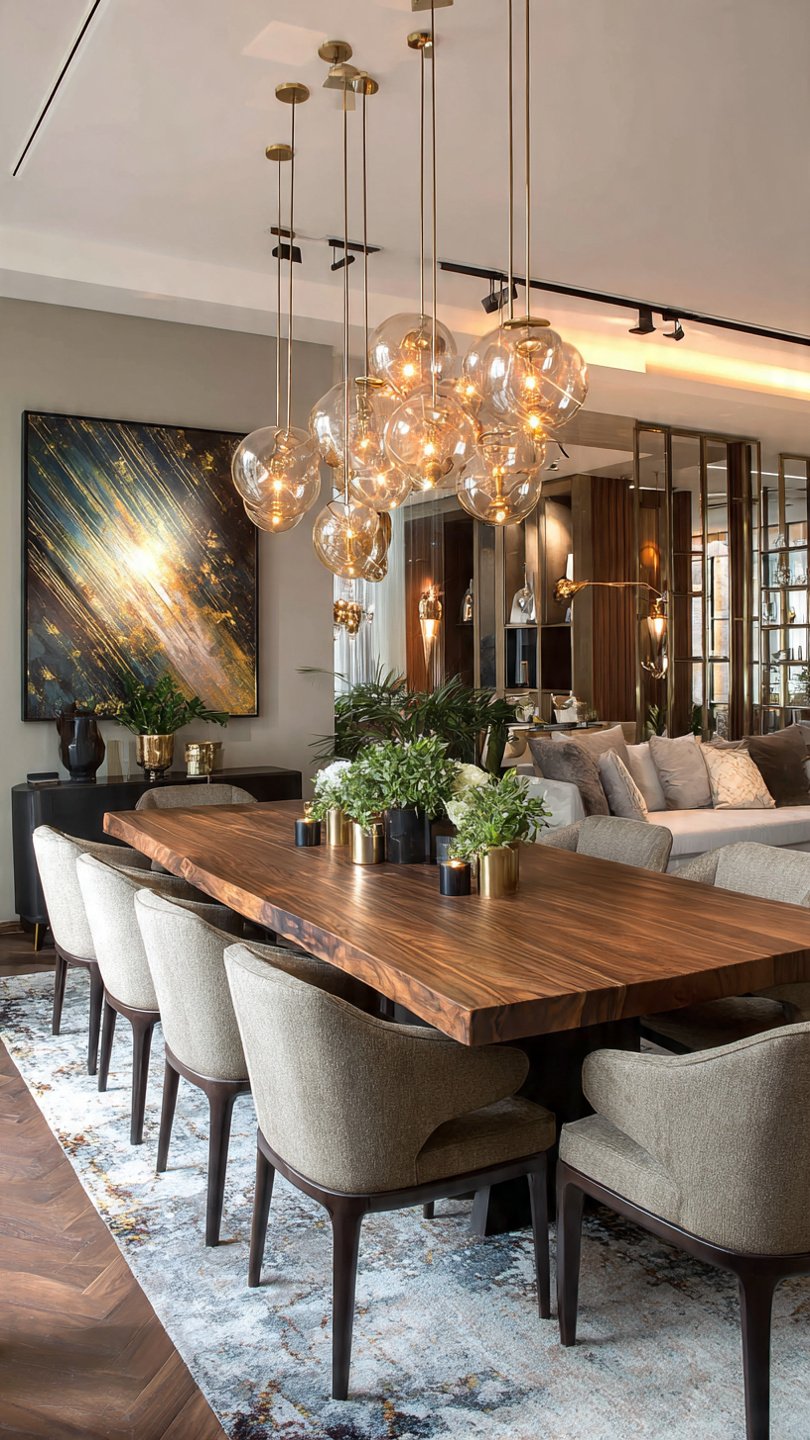
The dining room is more than just a place to eat—it’s a space for gatherings, celebrations, and creating lasting memories. Whether you prefer classic elegance, bold statements, or rustic charm, the right design transforms your dining room into a welcoming and stylish area.
This guide explores inspiring Dining Room ideas that combine aesthetic appeal, functionality, and modern trends to help you create the perfect dining environment.
Classic White Elegance Dining

Classic white elegance brings a timeless, clean, and sophisticated look to your dining room. It makes spaces feel bright, airy, and inviting.
Tips for achieving classic white elegance:
- Use white or off-white walls and furniture
- Add neutral-toned textiles like linen tablecloths or cushions
- Incorporate metallic accents, like gold or silver candle holders
White elegance pairs beautifully with natural light, mirrors, and fresh flowers. It’s perfect for both formal dinners and casual gatherings, offering versatility and sophistication.
Bold and Dark Dining
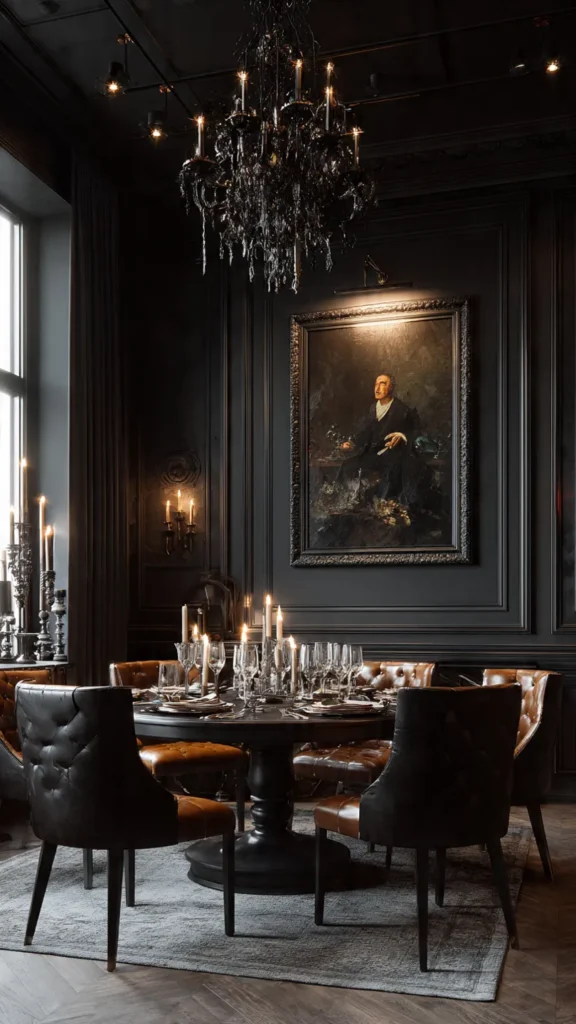
For a dramatic and luxurious feel, bold and dark dining rooms are an excellent choice. Deep hues like navy, charcoal, or emerald green create a rich, intimate atmosphere.
How to style bold and dark dining rooms:
- Dark-painted walls contrasted with lighter furniture
- Statement lighting fixtures, such as chandeliers or pendant lights
- Gold or brass accents for added warmth
Bold and dark dining spaces work well in modern, industrial, or classic interiors. They create a sense of drama without compromising comfort or elegance.
Rustic Charm Dining

Rustic charm brings warmth, coziness, and natural textures into the dining room. Wood, stone, and handcrafted decor create a welcoming, lived-in vibe.
Ways to incorporate rustic charm:
- Wooden dining tables and chairs with natural finishes
- Woven rugs, baskets, and textured textiles
- Exposed beams or stone accents for authentic character
Rustic charm is ideal for farmhouse-style interiors, blending casual comfort with timeless elegance. Pair with neutral tones or earthy colors for a balanced aesthetic.
Two-Tone Trend Dining
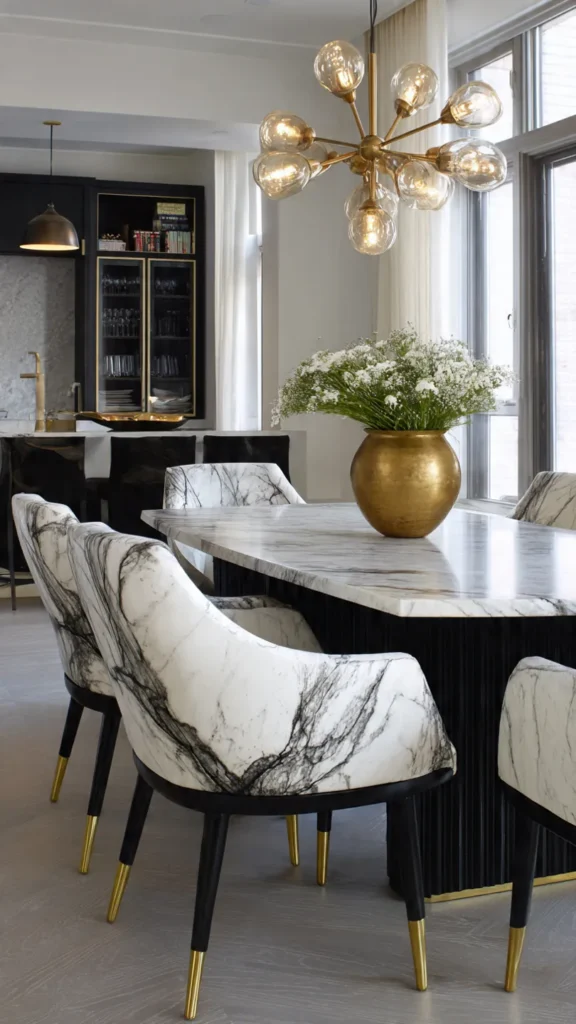
Two-tone dining rooms are a modern trend that adds depth and sophistication. Contrasting colors on walls, furniture, or cabinetry create visual interest and a contemporary edge.
Tips for two-tone dining design:
- Dark lower walls with lighter upper walls
- Contrasting furniture tones, like black chairs with natural wood tables
- Use accent colors in textiles or artwork
Two-tone dining rooms feel dynamic yet harmonious. They allow personalization without overwhelming the space and complement various design styles.
Geometric Patterns Dining
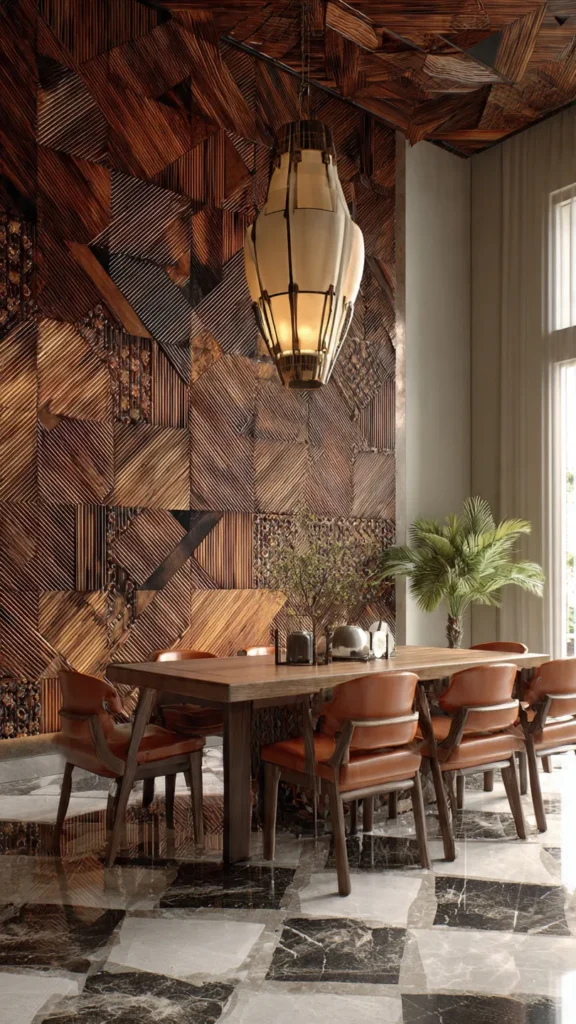
Geometric patterns add structure, rhythm, and visual intrigue to dining rooms. Whether on wallpaper, rugs, or furniture, patterns create a bold and modern aesthetic.
How to use geometric patterns:
- Feature wall with geometric wallpaper or painted shapes
- Rugs or cushions with repeating geometric motifs
- Subtle geometric designs on tableware or lighting fixtures
Geometric patterns provide a contemporary, stylish look. They work well in minimalist, modern, or eclectic interiors while adding personality and energy to the space.
Painted Panels Dining
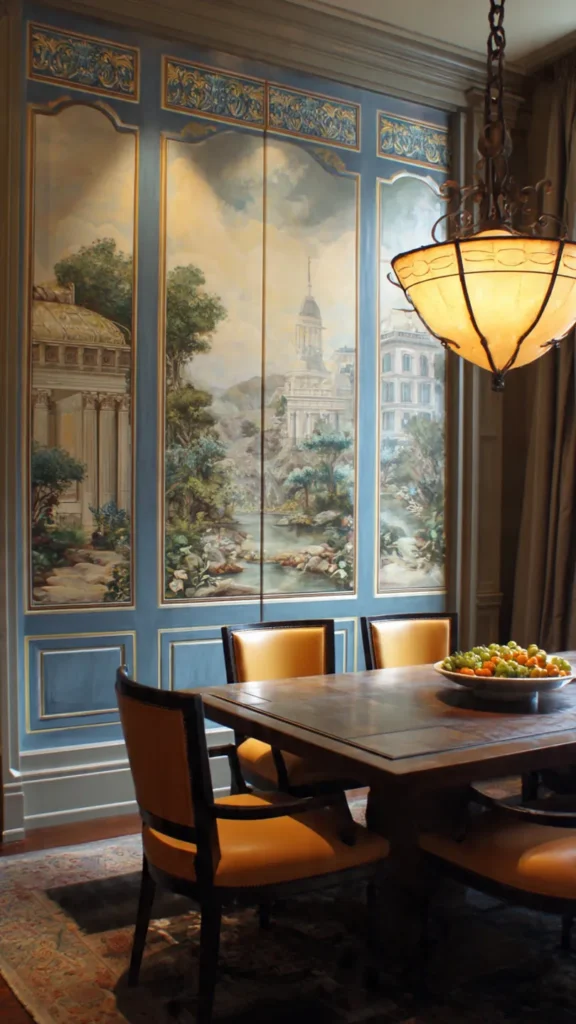
Painted panels add elegance and dimension to dining rooms. Whether it’s wainscoting, wall panels, or decorative moldings, painting them enhances sophistication and style.
Tips for painted panels:
- Use neutral or contrasting colors for a striking effect
- Highlight with artwork or mirrors above the panels
- Pair with classic furniture for timeless appeal
Painted panels are ideal for formal dining rooms or spaces that require architectural detail, creating a polished, high-end look.
Statement Wall Art Dining

Statement wall art elevates the dining room by serving as a focal point. Bold, oversized pieces or curated gallery walls bring personality and style.
Ways to incorporate statement wall art:
- Large paintings or murals above the dining table
- Sculptural pieces or 3D wall decor
- Curated gallery walls with coordinating frames and colors
Statement art reflects your personal taste and adds depth to the dining space. It balances the room’s aesthetic while engaging guests visually.
Tips for Designing the Perfect Dining Room
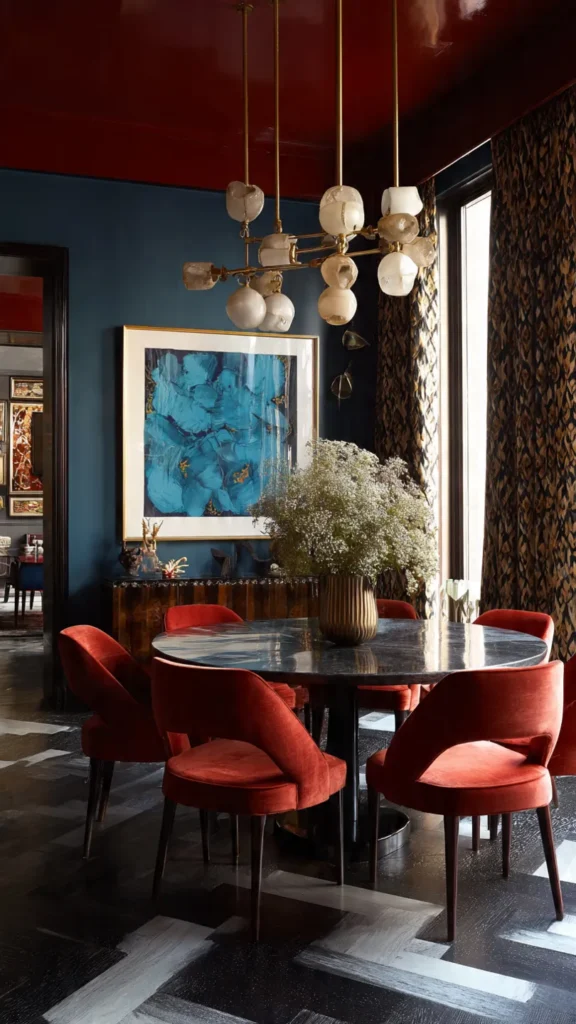
- Balance style and function – ensure comfortable seating and practical layouts
- Mix textures – combine wood, textiles, metal, and glass for depth
- Consider lighting – ambient, task, and accent lighting enhance mood and usability
- Add greenery – plants or floral arrangements add life and freshness
- Personalize with decor – unique ceramics, candles, or artwork make the space feel yours
FAQs Abouts Dining Room
- What is the best way to achieve classic white elegance in a dining room?
Use white or off-white walls and furniture, add neutral-toned textiles like linen tablecloths or cushions, and incorporate metallic accents such as gold or silver candle holders to create a timeless, clean, and sophisticated look. - How can I make a bold and dark dining room feel inviting?
Combine deep wall colors like navy or charcoal with lighter furniture, use statement lighting fixtures like chandeliers or pendants, and add warm metallic accents to balance drama with comfort. - What elements create rustic charm in a dining room?
Incorporate wooden tables and chairs with natural finishes, textured textiles such as woven rugs or cushions, and elements like exposed beams or stone accents to create a cozy, farmhouse-inspired aesthetic. - How do two-tone dining rooms work?
Two-tone dining rooms use contrasting colors on walls, furniture, or cabinetry. For example, dark lower walls with lighter upper walls or contrasting furniture tones add depth, visual interest, and a modern edge to the space. - How can geometric patterns enhance a dining room?
Use geometric patterns on wallpaper, rugs, cushions, or furniture to add structure, rhythm, and visual intrigue. Patterns bring a bold, contemporary look and work well in minimalist or eclectic interiors. - What are painted panels, and how do they affect dining room design?
Painted panels, such as wainscoting or decorative moldings, add elegance and dimension. Using neutral or contrasting colors highlights architectural details and creates a polished, sophisticated atmosphere. - How do I incorporate statement wall art in a dining room?
Use oversized paintings, murals, sculptural pieces, or curated gallery walls as focal points. Statement art adds personality, depth, and visual interest, enhancing the overall aesthetic of the dining space. - What lighting is ideal for a dining room?
Combine ambient, task, and accent lighting. Chandeliers or pendant lights provide central illumination, while accent lights highlight artwork or features, creating a balanced and inviting atmosphere. - How can I personalize my dining room?
Add unique decor elements like handmade ceramics, candles, plants, or artwork that reflect your personal style and complement the chosen design theme. - Can I mix multiple dining room styles in one space?
Yes, mixing styles like rustic and modern or bold and geometric can create an eclectic and unique dining room. Balance colors, textures, and proportions to maintain cohesion and harmony.